Your air conditioner does more than cool the air. It also removes moisture from the air. That moisture has to drain somewhere. When the condensate drain line clogs, the result can look like a leak, a dead thermostat, an AC that suddenly will not cool, or water in a pan under the indoor unit.
This is one of those HVAC problems where a little understanding helps a lot. The drain system is simple in concept, but the symptoms can be confusing if you do not know what you are looking at.
What the condensate drain line does
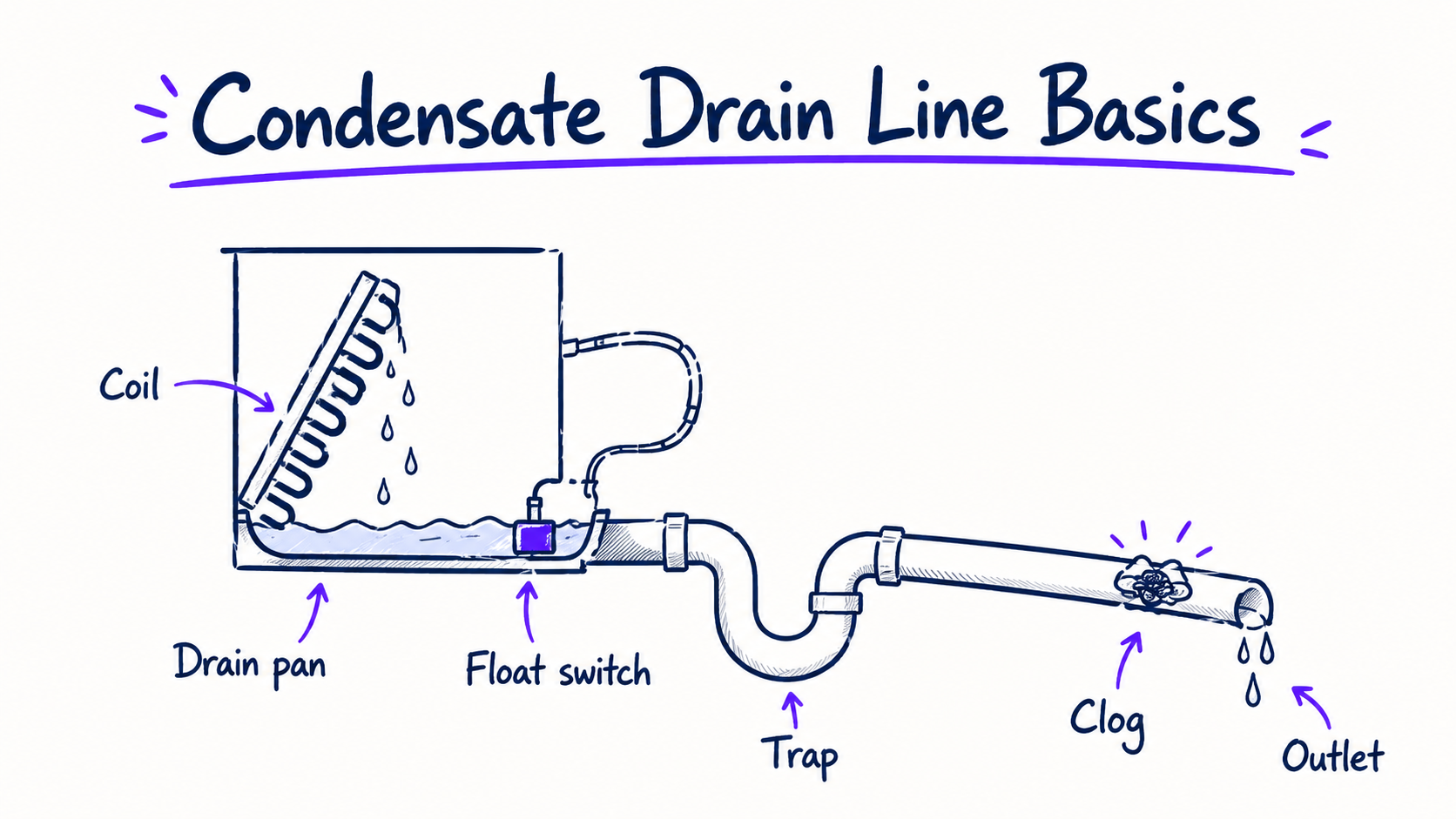
When warm indoor air passes over the cold evaporator coil, moisture condenses on the coil. That water drips into a drain pan and flows through a condensate drain line. In many homes around Ferris and Ellis County, the indoor unit may be in the attic, a closet, or another area where an overflow could damage ceilings, flooring, or walls.
A typical drain setup may include:
- The primary drain pan under the evaporator coil
- A PVC drain line
- A trap in the drain line
- A cleanout or vent opening
- A secondary/emergency pan under attic equipment
- A float switch that shuts the system down if water backs up
- A drain outlet outside the home or near plumbing
If water cannot leave through the normal path, it backs up. The system may keep running until water spills, or a safety switch may stop the AC before damage occurs.
Common symptoms of a clogged AC drain line
A clogged condensate drain can show up several ways.
Water near the indoor unit
This is the most obvious clue. You may see water in the emergency pan, on the floor near an indoor closet unit, or on the ceiling below attic equipment. Treat water seriously. Even a small amount can become drywall damage if ignored.
AC suddenly stops cooling
If the system has a float switch, rising water can trip the switch and shut down cooling. Homeowners often think the AC “died,” but the switch may be doing exactly what it is supposed to do: preventing overflow.
Thermostat is blank
Some float switches interrupt low-voltage control power. When they trip, the thermostat may go blank. That does not always mean the thermostat failed.
Musty smell near vents or equipment
Standing water, algae, sludge, and wet insulation can create musty odors. A drain issue can contribute to indoor air complaints even before water is obvious.
Dripping from a secondary drain
Some homes have a secondary drain outlet placed where you will notice it, such as above a window. If water is coming from a secondary drain, it may be warning you that the primary drain is clogged.
AC works, then stops again
A partial clog can cause intermittent trouble. The drain may empty slowly, the switch resets, and then the problem repeats when the system removes more moisture.
What usually clogs the drain
Condensate drains do not usually clog from one large object. They often clog from slow buildup:
- Algae growth
- Dust and debris from the coil area
- Slime in the trap or line
- Rust or pan debris
- Improper slope
- A poorly installed trap
- A disconnected or sagging drain line
- Insects or debris near the outlet
Texas humidity makes condensate drainage especially important because the system can remove a lot of water during long cooling cycles.
Homeowner-safe checks
You can look for clues without opening electrical panels or bypassing safety devices.
Check the emergency pan
If the indoor unit is in the attic, look carefully at the emergency pan under the equipment. If there is standing water in the pan, stop running the system and request service. The pan is not meant to be a normal operating reservoir.
Look at the drain outlet
If you know where the condensate line exits, check whether water is dripping when the AC has been running. No water at the outlet does not prove there is a clog, but it is useful information.
Check for a visible float switch
A float switch may be installed on the drain line, on a pan, or near the indoor unit. If you see water around it, assume it may have tripped for a reason. Do not tape it down, bypass it, or remove it to force the AC back on.
Look for ceiling stains
A new brown stain under attic HVAC equipment may indicate water overflow. Do not wait for the stain to grow.
Replace a dirty filter
A dirty filter does not directly clog the drain, but poor airflow can contribute to coil freezing. When ice melts, extra water can overwhelm a drain system that is already marginal.
What about pouring vinegar or bleach in the line?
Some homeowners use vinegar as a maintenance step when the system has a properly accessible cleanout. That may help slow algae buildup in some setups, but it is not a guaranteed fix for an active clog.
Be careful with harsh chemicals. Bleach and drain cleaners can damage components, create fumes, or cause problems if used incorrectly. If the drain is already backed up, pouring liquid into the wrong opening may just add more water to the pan.
If you are unsure which pipe is the condensate drain, do not guess.
Why you should not bypass the float switch
A float switch is not an annoyance. It is a protection device. Bypassing it may get the AC running temporarily, but it can also allow water to overflow into ceilings, walls, insulation, flooring, or electrical areas.
If the float switch shut the system off, the correct response is to find out why water rose high enough to trip it.
What a technician may do
Depending on the setup, a technician may:
- Clear the drain line with suction, pressure, or specialized tools
- Clean the trap and accessible fittings
- Verify drain slope
- Inspect the primary and emergency pans
- Test the float switch
- Check for coil freezing or airflow restriction
- Look for cracked pans, disconnected drain lines, or poor installation
- Recommend a better cleanout or float switch arrangement
The goal is not just to get water moving once. The goal is to reduce the chance of repeat overflow.
When water near the AC is urgent
Request service promptly if:
- Water is in the emergency pan.
- The thermostat is blank and water is present.
- Water is dripping through a ceiling.
- The AC shuts off repeatedly.
- You see ice on refrigerant lines or the indoor coil area.
- There is any electrical smell, buzzing, or wet electrical component.
- You do not know where the water is coming from.
Water and HVAC equipment are not a good combination. It is better to stop the system and protect the house than to force the AC to run while the drain issue gets worse.
FAQ
How do I know if my AC drain line is clogged?
Common signs include water near the indoor unit, water in the emergency pan, a blank thermostat, an AC that suddenly stops cooling, musty odor, or water dripping from a secondary drain outlet.
Can a clogged drain line make the AC stop working?
Yes. If the system has a float switch, the switch may shut off cooling when water backs up. This protects the home from water damage.
Is it safe to bypass the AC float switch?
No. Bypassing a float switch can allow water to overflow and damage the home. The switch should be treated as a warning that the drain system needs attention.
Why does my AC drain clog so often?
Repeated clogs may come from algae buildup, poor slope, a trap issue, dirty coil conditions, lack of maintenance access, or an installation problem.
Does a clogged drain mean my AC is broken?
Not always. The cooling equipment may be fine, but the drain system still needs to work properly. A technician should also check for related issues like freezing or poor airflow.
Related guides
- AC Not Blowing Cold Air? Start With These Safe Checks
- Inside Your Air Handler: The Parts Homeowners Should Recognize
- A Simple Seasonal HVAC Maintenance Calendar for Texas
Sources worth reading
- ENERGY STAR HVAC maintenance checklist: https://www.energystar.gov/campaign/heating_cooling/maintenance_checklist
- U.S. Department of Energy air conditioner maintenance: https://www.energy.gov/energysaver/maintaining-your-air-conditioner
WHEN TO REQUEST SERVICE
Need help with this issue in Ferris or nearby Ellis County?
Submit a request and we will review it for local follow-up. Include what the system is doing, when it started, and anything you have already checked.