When an air conditioner is running but the house is not getting cooler, the first goal is not to guess the most expensive problem. The first goal is to separate simple, homeowner-safe issues from problems that need tools, training, and licensed HVAC work.
In Ferris and the surrounding Ellis County area, AC systems often get blamed for comfort problems that started with airflow, attic ductwork, thermostat settings, dirty filters, clogged drains, or outdoor-unit issues. Use the checklist below to gather useful information before you request service, and stop if you run into electrical, refrigerant, or safety concerns.
First, define the symptom
“Not blowing cold air” can mean several different things. The more specific you can be, the faster the problem can be narrowed down.
Ask these questions:
- Is air coming out of the vents at all?
- Is the airflow strong, weak, or uneven?
- Is the air room-temperature, slightly cool, or warm?
- Is the outdoor unit running?
- Is the indoor blower running?
- Did the problem start after a storm, power outage, filter change, thermostat change, or maintenance visit?
- Is the whole house warm or only certain rooms?
- Is there ice, water, buzzing, burning smell, or a tripped breaker?
Those details matter. Weak airflow and room-temperature air are not the same problem. One hot bedroom and an entire house that will not cool are also different problems.
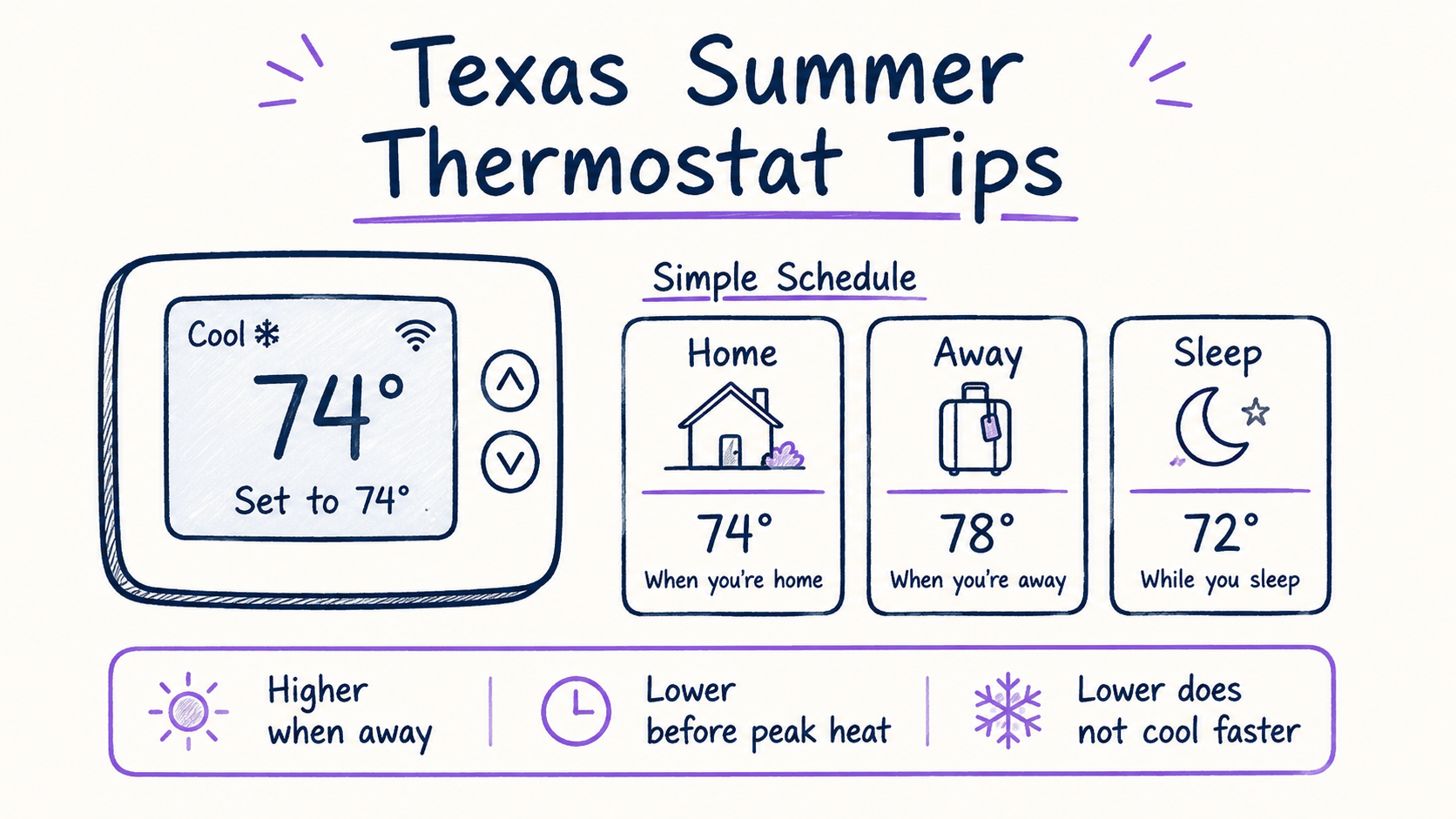
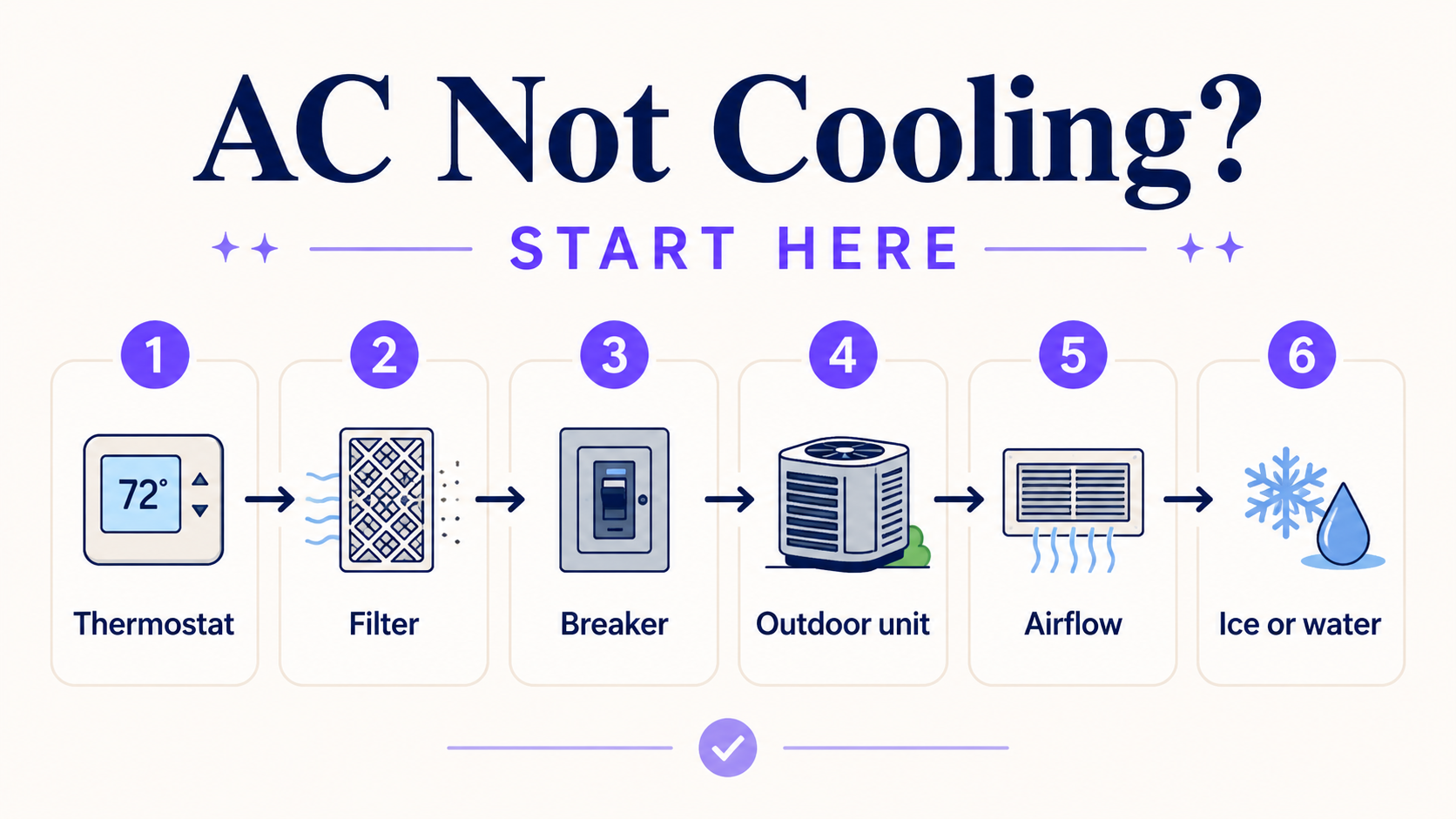
Check the thermostat without overcomplicating it
Start with the thermostat because it is easy to check and easy to misread.
Confirm:
- The system is set to Cool, not Heat, Off, or Emergency Heat.
- The set temperature is below the indoor temperature.
- The fan is set to Auto for normal cooling.
- The schedule is not switching into an away or eco setting.
- The thermostat has power and the screen is not blank.
- The thermostat is not being affected by direct sunlight, a lamp, a TV, or a nearby supply vent.
If the thermostat says the system is cooling but the indoor temperature keeps rising, the thermostat is probably not the full answer. It may be calling for cooling correctly while the HVAC system is failing to deliver it.
Check the air filter and return airflow
A dirty or overly restrictive filter can cause weak cooling, frozen coils, long run times, and poor airflow. Pull the filter and look at it in good light. If it is gray, matted, bowed inward, damp, or covered with dust and pet hair, replace it.
Use the correct filter size and install it with the arrow pointing in the direction of airflow. Do not stack filters, and do not use a high-MERV filter if your system cannot handle the added restriction. A filter that looks “better” on the package can still be too restrictive for some duct systems.
Also check return grilles. A blocked return can starve the system for air. Look for:
- Furniture pushed against return grilles
- Rugs, curtains, or boxes blocking airflow
- A return grille packed with lint or dust
- Closed interior doors that cut off return airflow
If the airflow from the vents improves after a filter change, that is useful information. If the system had ice on it, however, replacing the filter is not the end of the process. Ice needs time to thaw, and the cause still needs to be understood.
Look for ice before you keep running the system
Ice on the refrigerant line, indoor coil area, or outdoor unit during cooling season is a warning sign. It often points to airflow problems, refrigerant problems, dirty coils, blower issues, or metering issues.
If you see ice:
- Turn cooling off.
- Set the fan to On only if the blower is operating normally and there are no electrical concerns.
- Give the system time to thaw.
- Do not chip ice off the coil or refrigerant lines.
- Request service if the ice returns or if airflow is weak.
Running the AC with ice present can reduce airflow even more and may lead to water overflow when the ice melts.
Check the outdoor unit from a safe distance
Walk outside and look at the condenser unit. You do not need to open panels or touch electrical parts.
Look and listen for:
- Is the fan on top spinning while the system is calling for cooling?
- Is the unit making a loud buzz or hum without starting?
- Is the cabinet packed with grass clippings, cottonwood, leaves, or debris?
- Is hot air blowing out of the top when it runs?
- Are weeds or shrubs crowding the unit?
- Did the breaker trip?
Clear loose debris around the unit and make sure it has room to breathe. Do not remove panels, spray electrical areas, or keep resetting a breaker. A breaker that trips again is not a nuisance; it is a safety signal.
If the indoor blower runs but the outdoor unit does not, the house may get air movement without actual cooling. That can feel like the AC is “blowing but not cold.”
Check supply vents and room-by-room patterns
If some rooms are cool and others are hot, the problem may be ductwork, balancing, insulation, sun exposure, or return airflow rather than the outdoor unit.
Walk the house and compare rooms:
- Are supply vents open?
- Is air weak in one side of the house?
- Are certain rooms hot only in the afternoon?
- Are attic rooms, bonus rooms, or west-facing rooms worse?
- Are bedroom doors usually closed?
- Is one vent much louder or quieter than the others?
Do not close a large number of vents to “push more air” elsewhere. Closing vents can raise static pressure and make airflow problems worse. If a room has always been uncomfortable, the issue may be design-related, not a new AC failure.
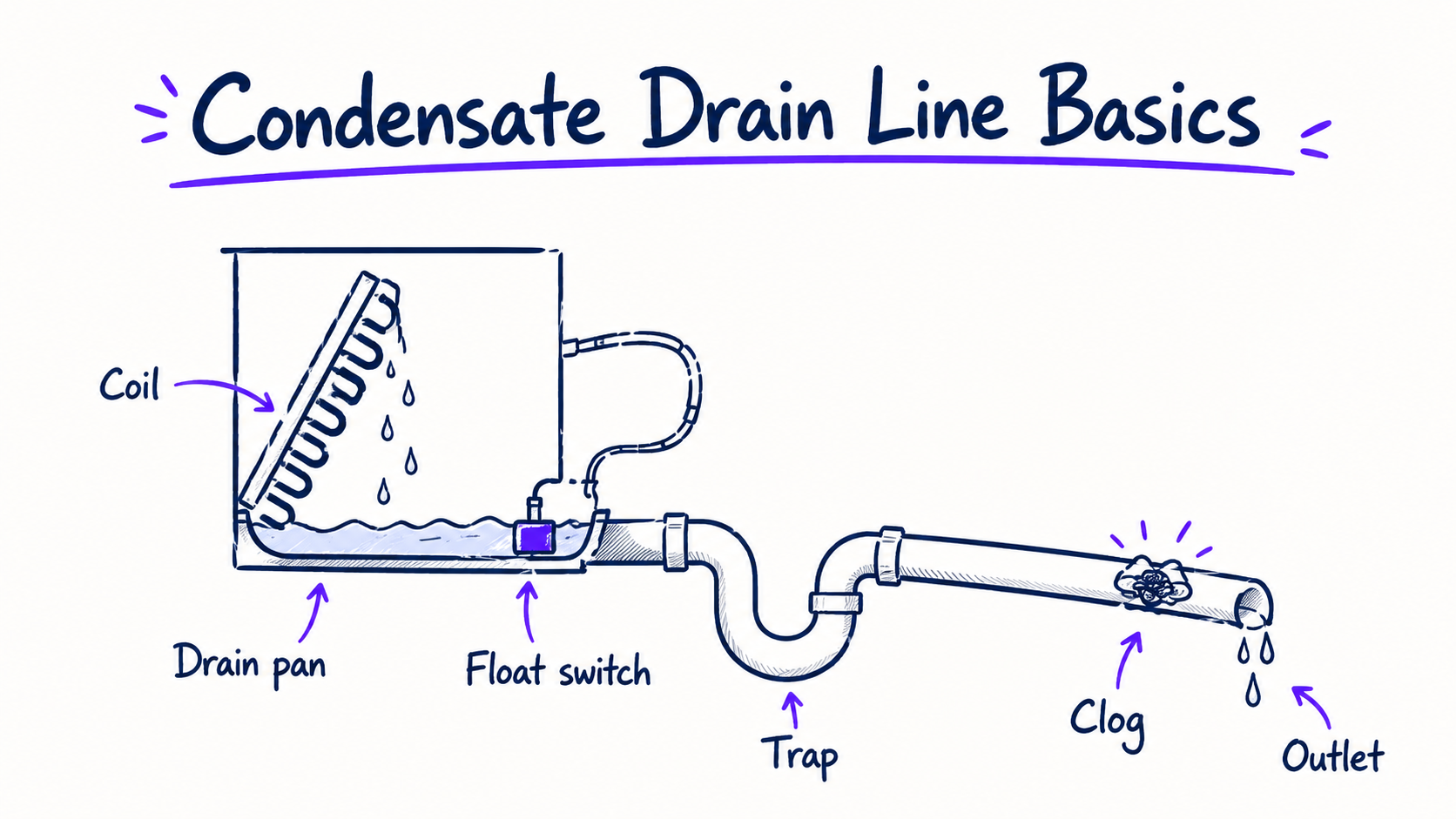
Check for water near the indoor unit
Many systems have a float switch that shuts the system down when the drain pan or condensate line backs up. This prevents water damage. If the thermostat is on, but the AC suddenly stops cooling and there is water near the indoor unit, the drain system may be involved.
Look for:
- Water in or around the emergency drain pan
- A wet ceiling near attic equipment
- A backed-up drain line outlet
- A float switch near the drain line or pan
- A thermostat that goes blank after water appears
Do not bypass the float switch. It is there to protect the home from water damage.
What not to do
Avoid the common moves that make a service call more expensive or harder to diagnose:
- Do not keep lowering the thermostat to extreme temperatures.
- Do not repeatedly reset a breaker.
- Do not bypass float switches, door switches, or safeties.
- Do not add refrigerant from a can.
- Do not open energized electrical compartments.
- Do not run the system for hours if ice is visible.
- Do not assume every cooling problem means “low Freon.”
Refrigerant does not get used up like gasoline. If refrigerant is low, there is usually a leak or another issue that needs proper diagnosis.
When to request AC service
Request service if any of these are true:
- The outdoor unit is not running while the thermostat calls for cooling.
- The breaker trips more than once.
- Airflow is weak even with a clean filter.
- Ice appears on the system.
- Water is near the indoor unit or ceiling.
- The AC runs constantly and cannot reach the set temperature.
- You hear buzzing, grinding, scraping, or rapid clicking.
- There is a burning or electrical smell.
- The system short-cycles every few minutes.
When you request service, include the indoor temperature, thermostat setting, whether the outdoor unit runs, whether airflow is weak, and whether there is ice or water. That information helps the technician start with a better picture.
FAQ
Why is my AC running but not cooling the house?
Common causes include a dirty filter, blocked airflow, outdoor unit problems, a frozen coil, low refrigerant, a clogged condensate drain, thermostat settings, dirty coils, duct leakage, or blower problems.
Should I turn the AC off if it is not blowing cold air?
If you see ice, smell burning, hear electrical buzzing, or the breaker trips, turn it off and request service. If the system is simply not keeping up, you can check the thermostat, filter, vents, and outdoor unit safely first.
Can a dirty filter make the AC stop cooling?
Yes. A dirty or restrictive filter can reduce airflow enough to hurt cooling performance and may contribute to coil freezing.
Is it always low refrigerant when the AC is not cold?
No. Low refrigerant is one possibility, but airflow problems, dirty coils, electrical issues, thermostat settings, duct problems, and drain safety switches can create similar symptoms.
How long should it take an AC to cool a house in Texas?
It depends on the starting temperature, outdoor heat, insulation, duct condition, system size, and humidity. If the system runs for hours and the indoor temperature does not move, that is not normal.
Related guides
- Better Thermostat Settings for a Texas Summer
- Condensate Drain Line Clogged? What the Symptoms Usually Mean
- Static Pressure Basics: Why Airflow Problems Fool People
- Attic Ductwork: What to Check Before You Blame the Equipment
Sources worth reading
- U.S. Department of Energy air conditioner maintenance: https://www.energy.gov/energysaver/maintaining-your-air-conditioner
- ENERGY STAR heating and cooling maintenance: https://www.energystar.gov/campaign/heating_cooling/maintenance_checklist
- Carrier AC troubleshooting overview: https://www.carrier.com/residential/en/us/products/air-conditioners/air-conditioner-troubleshooting/
WHEN TO REQUEST SERVICE
Need help with this issue in Ferris or nearby Ellis County?
Submit a request and we will review it for local follow-up. Include what the system is doing, when it started, and anything you have already checked.