A lot of homeowners hear “duct cleaning” and picture someone vacuuming the visible vent covers. That is not the same thing as properly cleaning a duct system.
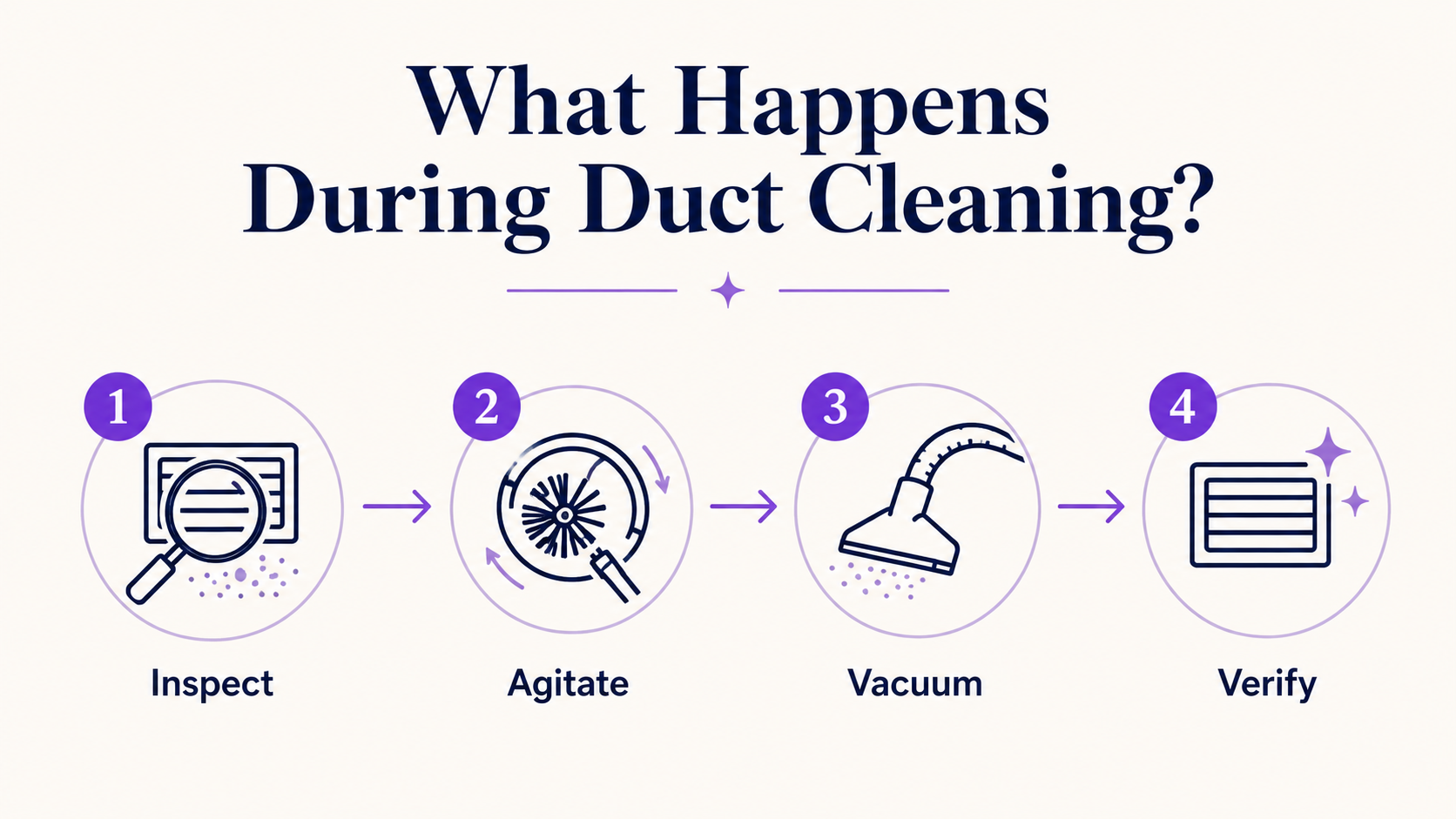
A proper duct cleaning visit should start with inspection, explain what is actually dirty, protect the home, loosen debris inside accessible duct sections, capture debris with negative pressure, clean registers and grilles, and verify the result. The exact process depends on the duct type, equipment, access, and the reason for cleaning.
This guide explains what should happen, what should not happen, and how to avoid paying for a quick vent dusting that gets marketed as full duct cleaning.
Step 1: Inspection before cleaning
The first step should be looking at the system. A contractor should be able to explain why cleaning is recommended and what evidence supports it.
Inspection may include:
- Removing and checking registers or grilles
- Looking inside accessible supply and return ducts
- Checking the return side and filter area
- Looking for pest debris, construction dust, water damage, or heavy buildup
- Inspecting accessible air handler areas
- Checking duct type and condition
- Looking for disconnected or damaged ducts
If no one looks inside the system before selling the job, the recommendation is not very meaningful.
Step 2: Protecting the home
Duct cleaning can disturb dust and debris. The process should be set up to capture contamination, not spread it through the house.
Basic protection may include:
- Drop cloths or floor protection
- Care around walls and furniture
- Sealing or controlling registers during cleaning
- Proper hose routing
- Filter protection or replacement planning
- Keeping debris contained
A sloppy setup can make the house dirtier than before.
Step 3: Creating negative pressure
In many proper cleaning methods, the duct system or section of duct is placed under negative pressure with vacuum equipment. The idea is to pull loosened debris toward collection equipment instead of blowing it into the living space.
The equipment may be truck-mounted or portable depending on the job. The important question is not just “how big is the vacuum?” but whether the process captures debris effectively for the duct layout.
Step 4: Agitating debris
Debris usually has to be loosened before it can be removed. Depending on duct type and condition, a technician may use brushes, air whips, compressed-air tools, skipper balls, or other agitation tools.
This step should match the duct material. Flexible duct, internally lined duct, older ductboard, and damaged ducts require care. Aggressive tools in the wrong duct can cause damage.
That is why inspection matters before cleaning. If the ducts are damaged or deteriorating, cleaning may not be the right solution.
Step 5: Cleaning registers, grilles, and boots
The visible vent cover is only one small part of the system, but it should still be cleaned. Registers and return grilles can hold dust, pet hair, and debris. The boot behind the register can also collect material.
A good job should address more than the front face of the vent.
Step 6: Addressing the return side
The return side often matters more than homeowners expect. Returns pull house air back to the system, and they are where dust can enter when filtration is poor or gaps exist.
A duct cleaning scope should be clear about whether it includes:
- Return grilles
- Return boxes
- Return ducts
- Filter rack area
- Return plenum
Cleaning only supply vents while ignoring the return side may miss a major dust source.
Step 7: Checking the air handler area
Duct cleaning and HVAC maintenance are related but not identical. A duct cleaning company may or may not clean blower compartments, coils, drain pans, and other air handler components. Those areas require appropriate HVAC knowledge and sometimes different service procedures.
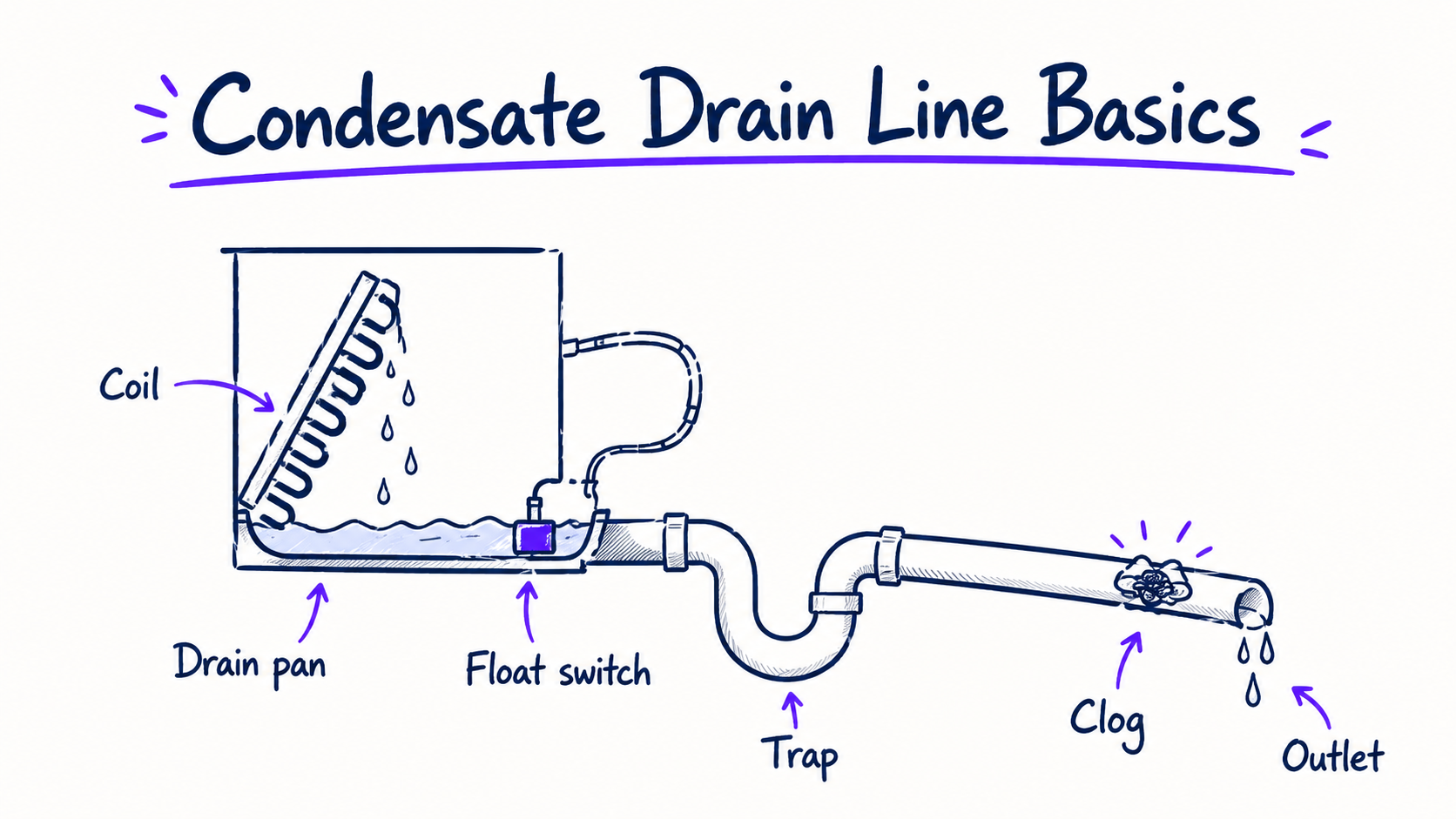
If the evaporator coil is dirty, duct cleaning alone will not solve the airflow or indoor air quality problem. If the drain pan is dirty or clogged, that is a drain issue. If the blower wheel is packed with dust, that affects airflow.
Ask what is included and what is not included.
Step 8: Final verification
After cleaning, the contractor should be able to show what was done. Useful verification may include:
- Before and after photos
- Visual inspection of accessible sections
- Confirmation that registers and grilles were reinstalled correctly
- Filter replacement
- Notes about damaged ducts, poor access, or recommended repairs
A good duct cleaning visit should leave you with a clearer understanding of the system, not just an invoice.
Red flags during a duct cleaning quote
Be cautious if you hear:
- “Every home needs this every year.”
- “This will definitely fix your allergies.”
- “This will cut your electric bill in half.”
- “We found mold” without testing, photos, or explanation.
- A very low whole-house coupon that turns into a high-pressure upsell.
- No inspection before quoting.
- No explanation of how debris is captured.
- Chemical treatments presented as automatic or required.
Duct cleaning can be legitimate, but it should be sold based on the condition of the duct system, not fear.
What about sanitizers, sealants, and fragrances?
Some companies offer antimicrobial treatments, sealants, or deodorizing products. These should not be automatic add-ons. Ask why they are recommended, what product will be used, where it will be applied, whether it is appropriate for your duct material, and what problem it solves.
A fragrance does not fix a moisture problem. A sanitizer does not repair a duct leak. A sealant does not replace damaged ductwork.
What you should do before the appointment
To make the visit smoother:
- Clear access to registers and returns.
- Move fragile items away from vents.
- Know where the indoor unit and filter are located.
- Mention recent remodeling, pests, water damage, or odors.
- Ask whether pets need to be secured.
- Ask how long the system will be off.
- Ask what parts of the duct system are included.
If your main complaint is weak airflow or hot rooms, ask whether they will inspect the duct condition and airflow issues, not just clean visible vents.
Duct cleaning versus duct repair
Cleaning removes debris. Repair fixes physical problems.
You may need duct repair instead of cleaning if there are:
- Disconnected ducts
- Torn flex duct
- Missing insulation
- Crushed duct runs
- Badly leaking return ducts
- Water-damaged duct material
- Deteriorating duct liner
- Poorly sealed boots or plenums
If the duct is damaged, cleaning may be a temporary distraction from the real fix.
FAQ
Is duct cleaning the same as vent cleaning?
No. Vent cleaning often means cleaning visible registers or grilles. Proper duct cleaning addresses accessible duct sections and debris capture, not just the vent cover.
How long does duct cleaning take?
It depends on the home size, number of systems, duct layout, contamination level, access, and scope. A full job should not feel like a quick pass over the visible vents.
Should ducts be inspected before cleaning?
Yes. Inspection helps confirm whether cleaning is needed and whether the ducts are in good enough condition to clean safely.
Will duct cleaning remove odors?
Only if the odor source is actually in the ducts and can be removed. Odors from moisture, pests, drain pans, smoke, building materials, or dirty coils may require other fixes.
Can duct cleaning damage ducts?
It can if the wrong tools or methods are used, especially on fragile, damaged, or poorly installed ductwork. The method should match the duct material and condition.
Related guides
- Is Air Duct Cleaning Worth It? A Straight Answer
- Attic Ductwork: What to Check Before You Blame the Equipment
- Inside Your Air Handler: The Parts Homeowners Should Recognize
- Static Pressure Basics: Why Airflow Problems Fool People
Sources worth reading
- EPA duct cleaning guidance: https://www.epa.gov/indoor-air-quality-iaq/should-you-have-air-ducts-your-home-cleaned
- NADCA homeowner information: https://nadca.com/homeowners
- EPA air cleaners and filters: https://www.epa.gov/indoor-air-quality-iaq/air-cleaners-and-air-filters-home
WHEN TO REQUEST SERVICE
Need help with this issue in Ferris or nearby Ellis County?
Submit a request and we will review it for local follow-up. Include what the system is doing, when it started, and anything you have already checked.